
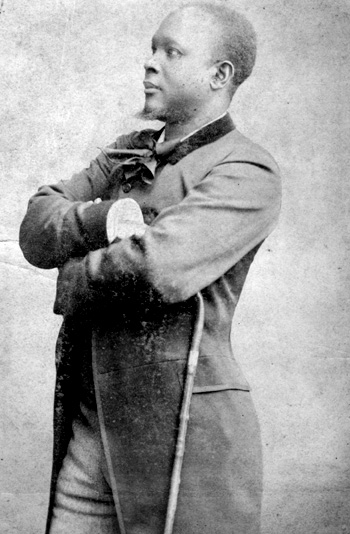
After establishing Janvier’s class-conscious explanation of Haiti’s woes, the virtues and shortcomings of the Haitian peasantry, Janvier’s plan for Haitian development deserves attention. As mentioned previously, Protestantism, education, and land reform were key to his vision. Protestantism as part of the moral reform, education for cultivation of the social body and aiding the progress of the nation, and land reform as the first step to ensuring this future. Land reform for Janvier often fixated on the 1883 law passed under Salomon. The 1883 decree gave state lands to those willing to cultivate crops for export, such as coffee or cacao or cotton. As noted by David Nicholls, this law also contained a clause which potentially opened up Haitian land to foreign ownership (Nicholls, Haiti in a Caribbean Context, 45). Janvier did not address this, possibly because of his political support for Salomon, who he depicted as a populist and friend of the peasant cause. In fact, in Le vieux piquet, a member of the narrator’s family is named after Salomon, presumably because he championed the peasant cause (Le vieux piquet, 34). Janvier elsewhere defends Salomon as a true democrat (Les Constitutions d’Haiti, 495).
Contradictions of Salomon’s presidency not withstanding, Janvier’s economic model argued for local accumulation of capital through small proprietorship or peasant collectives (Les Constitutions d’Haiti, 482). Obligatory education would accompany land reform (Janvier, L’Egalite des races, 8). Popular banks and access to credit would help smallholders develop their farms and improve profits (Haiti aux haitiens, 14). New taxes would make possible mandatory general education and access to banks and credit for Haiti, including taxes on foreigners and land (Les Affaires d’Haiti, 310, 316). The aforementioned agricultural collectives would consist of state concessions to peasant associations where the members could meet their needs and grow crops for export (La Republique d’Haiti et ses visiteurs, 588). This form of collectivism drew on the 1801 Constitution of Toussaint Louverture (Les Constitutions d’Haiti, 482). Yet, it also hints at a more sympathetic program for the peasantry’s cooperative labor practices, like the coumbite.
The infamous Article 7 of the constitution, prohibiting foreign ownership of land, was defended by Janvier as necessary to securing Haitian independence. He quoted from Pierre Lafitte as proof of the wisdom of the article for preventing powerful nations from taking over Haiti (La Republique d’Haiti, 364). Janvier even criticized sugar production as “aristocratic” and “esclavagiste” (Les Constitutions d’Haiti, 465). His critique of attempts to return to refined sugar as a primary export was based on economic and social grounds, since he questioned how wise it would be to pursue an export already sufficiently produced on the international market which was inapplicable and against the interest of smallholder production. Clearly, Janvier’s populist economic vision, prioritizing smallholder production and Haitian capital, represented an alternative path to development rather than subservience to foreign capital or a planter class.
On the Color Question
The identification of Janvier as a noirist by David Nicholls warrants commentary (Nicholls, From Dessalines to Duvalier, 113). Although Janvier’s populist leanings and accusations of color prejudice against Boyer, or Liberals, indicates a clear awareness of color as a factor in Haitian society, he also denied that blacks can be racist, claiming they are the first to suffer from racism (La Republique d’Haiti et ses visiteurs, 284). Moving beyond Janvier’s illogical conclusion on the question of blacks possessing color prejudice, he noted the presence of blacks and “mulattoes” in each of the two political parties (La Republique d’Haiti et ses visiteurs, 156). Like other Haitians writing with an eye to foreign readers, Janvier argued that colonial-era caste divisions had almost completely disappeared (Les detracteurs de la race noire et de la Republique d’Haiti, 49). Nonetheless, in Les Constitutions d’Haiti, 1801-1885, Janvier accuses Boyer of fomenting color prejudice, especially in his infamous Code Rural (Les Constitutions d’Haiti, 151). Furthermore, “mulattoes” who refused to recognize black authority were victims of atavism, a retrograde movement to the beliefs of their white ancestors (Les Constitutions d’Haiti, 292). On the question of the leadership of political leaders, color does not matter as long as the politician is responsible and competent (Les Constitutions d’Haiti, 294).
In light of Janvier’s class-based understanding of Haitian society, referring to him as a noirist may misdirect one from the question of class. Granted, he did accuse members of the Liberal opposition and past regimes led by mulattoes of racial prejudice, but he also recognized “light-skinned” Salnave as a true democrat (Les Constitutions d’Haiti, 346). The political vision of Janvier, which he identified as a democratic one, consisted of land for peasants, uprooting superstition (of the European and African variety) and color prejudice and promoting progress (Les Constitutions d’Haiti, 295). Any Haitian leader, regardless of color, who pursued these aforementioned goals, was considered a democrat in Janvier’s conception of a democracy. Since he defined the popular classes as the base of the nation, and Haiti was and remains a “black” nation, the government should represent and act in the best interests of this majority. While Janvier’s narrative of Haitian land and class struggle employed terms like “paysan noir” frequently, his work refers to Haiti as an Afro-Latin society in which nearly everyone is racially and/or culturally mixed complicate easy or quick generalizations. “Noir,” in this context, was tied to Haiti’s larger mission or vocation for black civilization.
In short, the insidious color question, a legacy of colonialism, was, to Janvier, in decline by the late 19th century and the political discord in Haiti was a result of class conflict and divergence on the question of foreign capital. Color may influence how historical actors perceived social, economic, and political conflict, but did not define or drive it. And Janvier, though not immune to attributing color prejudice to Boyer’s Code Rural, identified the struggles in Haiti as rooted in class, in terms of political economy. Part of his writings on the color question were undoubtedly aimed at Gobineau, Bonneau, Saint-Remy and Benjamin Hunt, authors who believed only or mainly mulattoes were fit to rule Haiti.
A somewhat similarly-minded Haitian intellectual with an opposing view on the question of color, Emmanuel Édouard, who located class and economic causes for piquet uprisings, commented on the color question (Édouard, Essai sur la politique interieure d’Haiti : proposition d’une politique nouvelle, 40). Édouard, who identified the color question, labor and public instruction as the three problems of Haiti, also noted that in so-called color struggles, “mulattoes” always had black allies and vice versa (Édouard, 46, 64). He also claimed the color question was both a cause and effect of Haitian civil wars (Édouard, 103). For him, the future of Haiti lay with a democratic and progressive party that will bring together the best of mulattoes and blacks (Édouard, 113). What explains the diverging views of Janvier and Edouard? Perhaps the different audiences of their writings may play a role, but even Édouard, who names color as one of the pressing dilemmas, approaches it with nuance while calling for a new political party to improve education, agriculture, and end civil wars. One detects the idea, later adopted by Nicholls and Dupuy, for example, that the black and “mulatto” wings of the Haitian elite, who overlapped significantly on ideology, exploited color to suit their own interests and split the spoils with their partisans and foreigners. In the case of Janvier, one could argue that his vision of progress, which claimed that a Haitian leader did not have to be a noir in color (as long as they’re competent and committed to his populist-leanings), embraced this notion of partnership between the best of both “colors.”
Conclusion
The relevance of Janvier’s ideas should be clear for those in Haiti today. He identified class as key to Haiti’s problems, anticipating Marxist analysis of Haitian society. He elevated the importance of the worker in building a stronger nation, advocating a set of policies to realize that goal. Certain contradictions, such as his lack of comment on Salomon’s opening of the National Bank with French capital, or his distorted view of the history of land redistribution to favor Dessalines and Salomon rather than Petion, call into question some of his political alignments and choices. His economic vision even overlapped somewhat with Edmond Paul, a member of the opposing Liberals. But one can surely read Janvier’s work as falling somewhere along the continuum of what Jean Casimir identified as a counter-plantation system. As such, Janvier could be read as an intellectual for the masses, His benevolent paternalism and Francophile orientation predisposed him to a sometimes condescending stance on class, and in some cases, even minimizing the distance between the workers and the bourgeoisie. Yet, in spite of these contradictions, Janvier identified the legacy of 1804 in the piquets struggling for land and meaning. He foresaw the disconnect between rural Haiti and the urban elites, so painfully clear in Le vieux piquet, where the cries of peasants of the Sud are never heard by the elites of Jérémie.
His economic nationalism, defense of piquet rebels, and familiarity with early sociology and socialism enriched his analysis of Haiti’s woes in abundantly surprising ways. Although Jean-Jacques Cadet identifies within him a strain of socialism, Janvier is perhaps better seen as a positivist and liberal whose financial nationalism and populism incorporated socialist elements. His conception of the democratic state guiding the untutored masses demonstrated a connection with Delorme’s notion of democracy as best functioning in view of the people rather than by the people, even going so far as defending Soulouque’s empire, preferring despotism over anarchy (Les Constitutions d’Haiti, 265). He elaborated his belief in a strong, centralized state for encouraging labor, security and avoiding anarchy, quoting Schopenhauer on the need for constitutions to contain a possibility of despotism to prevent lawlessness (La Republique d’Haiti et ses visiteurs, 492).
Positivism’s alleged benefits for women and the working-class, mainly in the latter, were self-evident in Janvier’s writings on Haitian society, as was Comte’s belief in the need to control property because of its social nature (Comte, General View of Positivism, 113). For Janvier, private property in the hands of peasants or peasant cooperatives needed to be taxed, but also provided with access to credit, banking, state-funded mandatory education, and social control under a benevolent state. The ability of the estate proprietor to exploit sharecroppers or landless workers would have been quite limited if Janvier’s vision had been implemented, placing even more control on large estates by limiting their ability to find labor. In that regard, Janvier’s populist views surpass that of Delorme, a fellow member of the National party and keen supporter of state intervention in promoting agriculture and acting in the best interests of the masses. Further study of his two full-length novels may also shed light on Janvier’s place in Haitian literature, which could enrich our understanding of his political writings. Unfortunately, several of the aforementioned ideas were never implemented, or perhaps done so too late. They remain relevant to the 21st century as questions of sovereignty, social justice, and political reform continue to shape the Petrocaribe protests.
Bibliography
Auguste, Michel Héctor, Sabine Manigat, and Jean L. Dominique. 1986. Haití: la lucha por la democracia : clase obrera, partidos y sindicatos. Puebla, Pue : Universidad Autónoma de Puebla.
Bellegarde-Smith, Patrick. In the Shadow of Powers: Dantès Bellegarde in Haitian Social Thought. Atlantic Highlands, NJ: Humanities Press International, 1985.
Bonneau, Alexandre. Haïti : Ses progrès, son avenir; avec un précis historique sur ses constitutions, le texte de la constitution actuellement en vigueur, et une bibliographie d’Haïti. Paris : E. Dentu, 1862.
Bulmer-Thomas, V. The Economic History of the Caribbean Since the Napoleonic Wars. New York: Cambridge University Press, 2012.
Cadet, Jean-Jacques. « L’aventure de la pensée socialiste en haiti. Une analyse des oeuvres d’Antenor Firmin, Démesvar Delorme et Louis-Joseph Janvier. » Le Grand Soir. https://www.legrandsoir.info/l-aventure-de-la-pensee-socialiste-en-haiti-une-analyse-des-oeuvres-d-antenor-firmin-demesvar-delorme-et-louis-joseph-janvier.html
Comte, Auguste. A General View of Positivism. London : Tráubner and co., 1865.
Delorme, D. (Demesvar). Études sur l’Amérique. La Démocratie et le préjugé de couleur aux États-Unis d’Amérique. Les Nationalités américaines et le système Monroë. Bruxelles : H. Thiry-Van Buggenhoudt, 1866.
La Misère Au Sein Des Richesses : Réflexions Diverses Sur Haïti. Port-au-Prince : Editions Fardin, 1976.
Les Théoriciens au pouvoir. Causeries historiques. Paris : H. Plon, 1870.
L’Indépendance d’Haïti et la France, par Charolais. Paris : E. Dentu, 1861.
Denis, Lorimer and Francois Duvalier. Translated by Louis G. Lamothe. Problema de clases en la historia de Haiti: sociología política. Port-au-Prince: Al Servicio de la Juventud, 1948.
Dubois, Laurent. Haiti: The Aftershocks of History. New York: Metropolitan Books, 2012.
Dupuy, Alex. Haiti in the World Economy: Class, Race, and Underdevelopment Since 1700. Boulder, Colo.: Westview Press, 1989.
“Class formation and underdevelopment in nineteenth-century Haiti,” Race & Class 24, no. 1 (1982): 17-31.
Edouard, Emmanuel. Essai Sur La Polítique Intérieure D’Haïti : Proposition D’une Politique Nouvelle. Paris : A. Challamel, 1890.
Fatton, Robert. The Roots of Haitian Despotism. Boulder: Lynne Rienner Publishers, 2007.
Firmin, Joseph-Anténor. The Equality of the Human Races: (Positivist Anthropology). New York: Garland Pub., 2000.
Lettres De Saint Thomas Études Sociologiques, Historiques Et Littéraires. Paris: V. Girard E. Brière, 1910.
Hunt, Benjamin S. Remarks on Hayti as a Place of Settlement for Afric-Americans: and on the Mulatto as a Race for the Tropics. Philadelphia: T. B. Hugh, 1860.
Janvier, Louis-Joseph. Les Détracteurs de la race noire et de la république d’Haïti (avec Jules Auguste, Clément Denis, Arthur Bowler et Justin Dévost). Paris : Marpon et Flammarion, 1882.
La République d’Haïti et ses visiteurs (1840-1882); réponse à M. Victor Cochinat (de La Petite presse) et à quelques autres écrivains. Paris : Marpon et Flammarion, 1883.
L’Égalité des races. Paris : G. Rougier, 1884.
Haïti aux Haïtiens. Paris : A. Parent, A. Davy, 1884.
Les Antinationaux, actes et principes. Paris : G. Rougier, 1884; Port-au-Prince : Panorama, 1962.
Les Affaires d’Haïti (1883-1884). Paris : C. Marpon et E. Flammarion, 1885; Port-au-Prince : Panorama, 1973.
Les Constitutions d’Haïti, 1801-1885. Paris : C. Marpon et E. Flammarion, 1886; Port-au-Prince : Fardin, 1977.
Le Vieux Piquet ; scène de la vie haïtienne. Paris : A. Parent, 1884.
Du Gouvernement civil en Haïti ; avec le portrait de l’auteur. Lille : Le Bigot frères, 1905.
Jean, Eddy Arnold, and Justin O. Fièvre. Les Idées Politiques Au XIXème Siècle. Port-au-Prince: Editions Haiti – Demain, 2011.
Joachim, Benoit. “La estructura social en Haití y el movimiento de independencia en el siglo XIX,” Secuencia no. 2 (1985): 171-182.
Laguerre, Michel. The Military and Society in Haiti. Knoxville : University of Tennessee Press, 1993.
Laroche, Léon. Haïti : Une Page D’histoire. Paris: A. Rousseau, 1885.
Lewis, Gordon K. Main Currents in Caribbean Thought: The Historical Evolution of Caribbean Society in Its Ideological Aspects, 1492-1900. Baltimore: Johns Hopkins University Press, 1983.
Leyburn, James Graham. The Haitian People. New Haven, London, 1966
Manigat, Leslie François. 2001. Eventail d’histoire vivante d’Haiti : des préludes à la Révolution de Saint Domingue jusqu’à nos jours : (1789-1999). Port-au-Prince, Haiti : CHUDAC.
Moses, Wilson Jeremiah. 1978. The Golden Age of Black nationalism, 1850-1925. Hamden, Conn: Archon Books.
Nicholls, David. From Dessalines to Duvalier: Race Colour, and National Independence in Haiti. New York: Cambridge University Press, 1979.
Haiti in Caribbean Context: Ethnicity, Economy, and Revolt. New York: St. Martin’s Press, 1985.
Price, Hannibal. De La Réhabilitation De La Race Noire Par La République D’Haïti. Port-au-Prince : Impr. J. Verrollot, 1900.
Ramsey, Kate. The Spirits and the Law: Vodou and Power in Haiti. Chicago : University of Chicago Press, 2011.
Sibeud, Emmanuelle. « Comment peut-on être noir ? » Le parcours d’un intellectuel haïtien à la fin du XIXe siècle. » Cromohs, 10 (2005) : 1-8
< URL : http://www.fupress.net/index.php/cromohs/article/view/15622/14489#.WEpL8qf0uvs>
Sheller, Mimi. Democracy After Slavery: Black Publics and Peasant Radicalism in Haiti and Jamaica. Gainesville: University Press of Florida, 2000.
Thoby, Armand. La question agraire en Haïti. Port-au-Prince, 1888.
Trouillot, Michel-Rolph. Haiti, State against Nation: The Origins and Legacy of Duvalierism. New York: Monthly Review Press, 1990.
Leave a Reply